
Date
Feb 18, 2027
Confirmed 132 days left
Battery passport scope begins
132
days left
The EU has created the legal framework for Digital Product Passports (DPP) under ESPR. Concrete obligations roll out by product category through sector-specific rules, delegated acts, and implementing acts. Are you prepared?
Dates marked with ~ or * are indicative. The timeline separates legal adoption from the start of mandatory application. DG GROW webinar dates are official Commission timeline points, not final sector law until confirmed in the relevant act.
Status
Confirmed deadlines
4
First ESPR wave
6
Watchlist
3
Date
Feb 18, 2027
Adoption
~2027 *
Application
~2029 *
Application
~2028 / 2029 *
Application
~2028 *
Application
~2028 *
Application
~2029 *
Date
23 September 2029
Adoption
~2029 *
Adoption
~2028 *
Date
Aug 1, 2030
Monitor
No DPP date
Date
1 Sep 2032
A Digital Product Passport (DPP) is a structured digital record containing information about a product's origin, composition, repairability, and recyclability. Required by the EU's Ecodesign for Sustainable Products Regulation (ESPR).
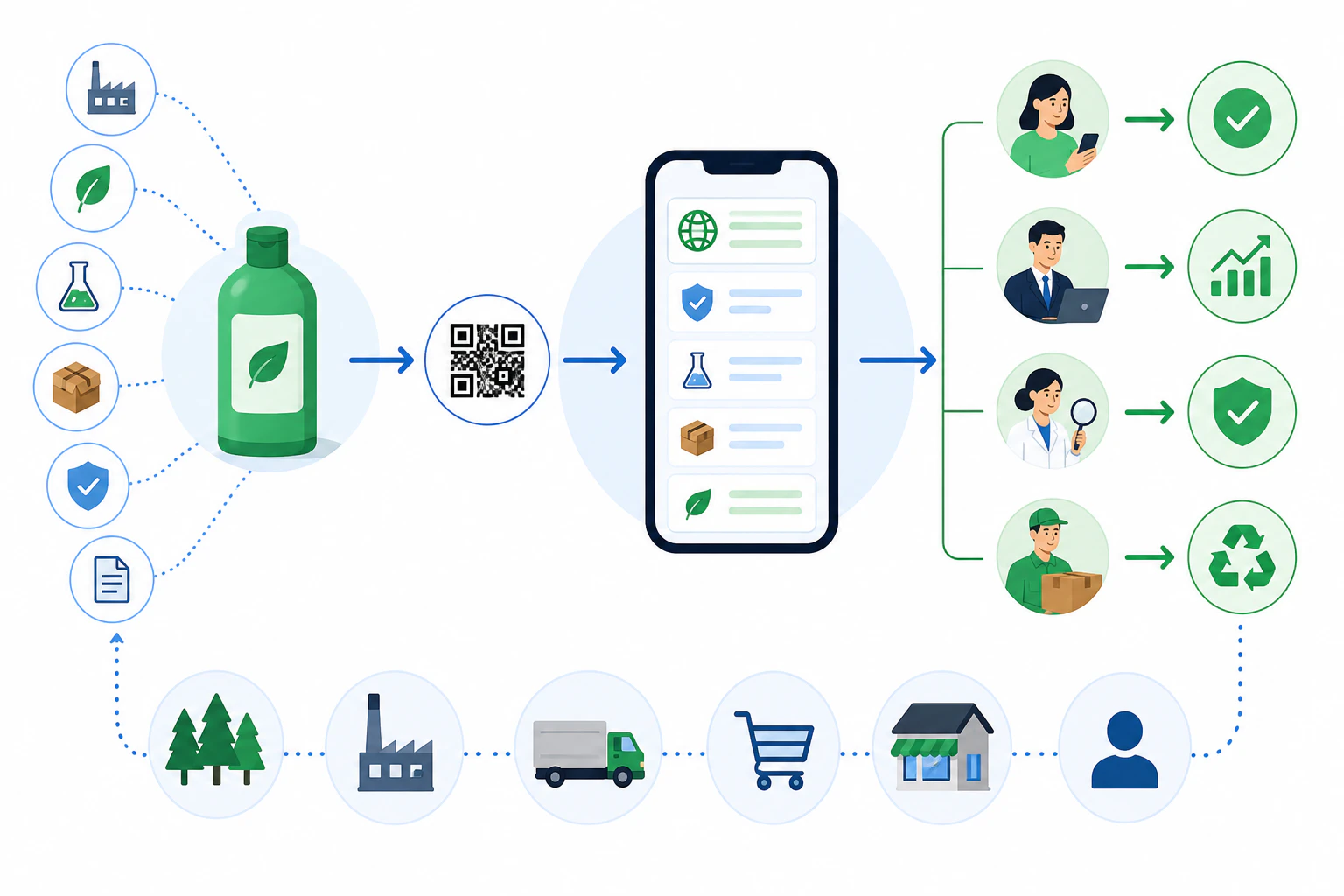
ESPR applies to virtually all physical products placed on the EU market. The first product groups and the adjacent sectors already worth monitoring:
Textiles, particularly apparel. Footwear has a separate preparatory track.
Learn more →Wooden and upholstered furniture. Wood certification, durability scores, and recyclability data.
Learn more →Mattresses are listed separately in the first ESPR Working Plan. Prepare material, durability and end-of-life data early.
Learn more →Battery passport obligations start from February 2027 for categories covered by the Battery Regulation.
Learn more →Consumer electronics and appliances. Right to repair, spare parts availability, and energy efficiency.
Learn more →Primary metals and metal products. Carbon footprint tracking, recycled content, and supply chain traceability for carbon-intensive materials.
Learn more →Construction products and materials. CPR GWP reporting obligations are already in force since January 2026; DPP delegated acts are planned under the CPR Working Plan 2026–2029.
Learn more →PPWR already creates packaging-law duties for labelling, selected digital data carriers and the one-data-carrier principle. The DG GROW timeline also places a packaging DPP milestone in 2028, but a future act is still needed before this becomes a confirmed DPP obligation.
Learn more →Tyres are included in the first ESPR working plan with an indicative 2027 window, but exact duties still depend on the delegated act.
Learn more →The Toy Safety Regulation mandates a Digital Product Passport for toys from 1 August 2030. Composition, safety documents, and traceability data are required.
Learn more →Regulation (EU) 2026/405 applies from 23 September 2029 to detergents and end-user surfactants. Model-level DPP, UFI, ingredient disclosure, refill logic and poison-centre data.
Learn more →Cosmetic products do not have a confirmed DPP obligation yet, but EU rules already require product documentation, safety, CPNP, labelling and market-surveillance records that need to stay consistent.
Learn more →In-depth guides on EU regulations, compliance requirements, and implementation strategies.
Definitions, differences between barcodes and GS1 Digital Link, how DPP works.
Learn morePenalties, deadlines, manufacturer and importer obligations under ESPR.
Learn moreStep by step: from identifier strategy to data carriers and passport records.
Learn moreStart with the most useful guides and the latest regulatory update for your implementation plan.
Updates on EU regulations, ESPR implementation timelines, and industry insights.
Two Commission guidance texts from late August 2026 mention the DPP: forced labour investigations and NZIA procurement. What they say, and what they do not.
Read more →What the Official Journal publication of six DPP standards on 15 July 2026 changes for ESPR implementation.
Read more →A JRC study proposes batch identifiers for apparel DPPs, mostly model-level data and voluntary item IDs. These are not final legal requirements.
Read more →In-depth guides on EU regulations, compliance requirements, and implementation strategies.
Learn how GTIN, batch and serial data become DPP URLs, what to print in QR codes, and what ESPR does and does not require today.
Learn moreStep-by-step Digital Product Passport guide: identifiers, data carriers and ESPR readiness for manufacturers and importers.
Learn moreWhat happens if a required DPP is missing or incorrect: national fines, product withdrawal, import bans and market-surveillance steps under ESPR.
Learn more